

ai tools for students
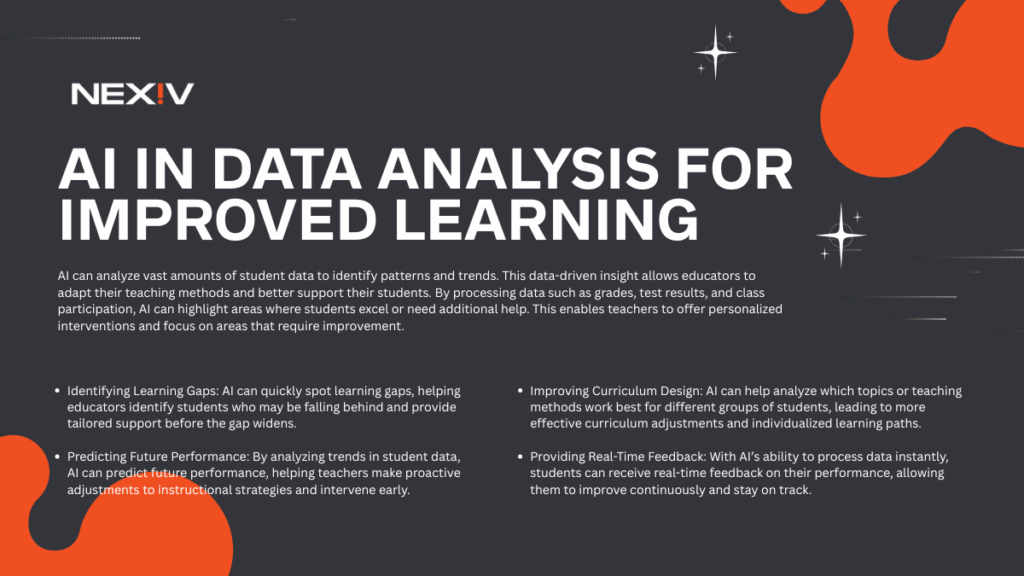
Here is the ai tools for students. In 2023, the world was surprised at chatbots that were able to write the basic essays. By 2026 the technology is an advanced ecosystem of specialized thought partners. The most intelligent students in the world are not merely using AI to find answers; they are also using it to develop more insightful knowledge, organize challenging schedules, and learn challenging ideas in the STEM field.
This guide will be a guide to the academic year. We will immensely explore the finest available tools, the way to achieve the best results out of them, and the ethics that you must observe in order to remain at the top without losing your own voice.
Lets disscuss ai tools for students:
Receiving, checking and integrating information.
The conventional search engine is sometimes like searching in a hay stack. However, the ai tools for studentsI behave as masterful librarians who read all the books in the building.
1. Perplexity: The Search Engine That Speaks
Standard search has been substituted with perplexity among millions of students. Rather than a list of links it is a written overview of the subject with explicit citations.
The Deep Research Mode: In 2026, the Pro version of Perplexity has a multi-step research agent. When you present a complicated question such as: How did the spice trade of the 19 th century influence modern Indonesian cuisine? the AI does not simply find a single article. It searches 10-20 sub-searches, reads the results and wrote you a 2,000-word report.
Learning with it: It is not something to read the summary. Click the citations! Check that the source has been correctly interpreted by the AI. This develops your lateral-reading abilities – an important literacy skill in the 21 st century.
2. Consensus: Scientific Truth at Your Fingertips
In case you are writing a science or social science paper, it is not sufficient to write that I discovered it on a blog. Consensus is a search engine that utilizes peer-reviewed research papers only.
The Consensus Meter: When you pose a Yes/No question (e.g. Does mindfulness actually reduce test anxiety?), Consensus is used to analyze hundreds of papers and provide you with a percentage of the number of scientists who agree.
Best: Discovering evidence about your thesis statements that is heavyweight. It and takes out the problem of hallucination since it is based on published data.
3. NotebookLM: Your Private Study Brain
The NotebookLM by Google is the tool that could help to do deep work best. You post your own files Lecture PDF, YouTube transcript, textbook chapter, etc., and AI only knows those files.
The Audio Overview: There is a very popular podcast called the Deep Dive. NotebookLM has the ability to create a 10-minute audio file of a conversation in which two AI hosts talk about your notes. It is ideal to study content during the gym session or on the commute.
Study Guide Generator: See 50 pages of scribbly notes transformed into a coherent study guide that has practice questions and a dictionary of important terms with a single click.
STEM and Technical Mastery
Mathematical problems and logic.
Precision is needed in STEM subjects (Science, Technology, Engineering, and Math). Standard chatbots may be inaccurate in math, but specialized tools are created to be accurate.
4. Wolfram Alpha: The Computational Engine
The gold standard is Wolfram Alpha. It does not rely on guesses, as ChatGPT does; instead, it relies on a huge set of mathematical rules.
Step-by-Step Solutions: To a student, the answer is not always the most important. The magic is in the process. Wolfram Alpha will demonstrate how to solve the problem to the solution, be it a complicated complex integral or a chemical balance equation.
Data Analysis: You can feed it raw data to make professional quality charts and statistical models with which you can prepare your lab reports.
5. Photomath and Gauthmath: The Pocket Tutors
These are mobile applications that have gone very advanced. They have now the “Advanced OCR” (Optical Character Recognition) which helps them to read even the most untidy handwriting.
Mastery of concept: These apps have come to contain video tutorials and hint modes rather than merely displaying the solution. When the AI thinks you are stumped it will provide you with a minor clue to determine whether you can work out the next step on your own or not.
Parent Support: They are good when parents are just trying to assist their children with their homework but may have the problem of forgetting their high school algebra.
6. Cursor: The New Way to Code
Cursor is a must-have in case you are a Computer Science student. It’s an AI-native code editor.
Whole-Repo Understanding: Unlike in a basic chatbot where you copy-paste code, Cursor knows about your project as a whole. You can say, where was the bug in my login logic? and it will go through all your files and find the mistake.
System and Mindfulness.
Dealing with the “Academic Overhead.”
It is not only about studying, but it is also about being a student that has to deal with an enormous portion of what is commonly referred to as administrative work; due dates, to-do lists, and lengthy lectures.
7. Otter.ai: Never Miss a Word
It is hardly possible to attend a lecture and simultaneously to make good notes. Otter is the best ai tools for students resolves this by taking notes as the lecture gets delivered.
Automated Summaries: Otter will provide you with a summary of the most significant points that were discussed after the class.
Searchable History: When you can remember the professor said something about The Treaty of Versailles but you cannot find it in your notes, you can just search the transcript.
8. Goblin Tools: For the Overwhelmed
It is a little secret that everyone must have regardless of the student with ADHD or someone feeling overwhelmed.
The Magic To-Do List: Assign it a large, daunting one, such as one to apply to Internships. Goblin Tools will divide that into 15 small steps, such as adding the header on resume, writing one cover letter, and searching LinkedIn to find 3 vacancies.
The Judge Tool: Are you wondering whether your email message to your professor is too pushy? The Judge tool examines your text and informs you how exactly you are coming across (e.g. this sound professional but slightly demanding).
9. Notion AI : The All-in-One Workspace
Notion is the best ai tools for students has transformed itself to a plain notebook to a complete project manager.
AI Tables: You may enter a list of dates on your course schedule and Notion AI will automatically build you a calendar of all of your assignments with reminders.
Writing Assistant: This is used to convert your bulleted brainstorm into an outline.
Writing and Language Learning
Sharpening your voice and broadening your horizons.
The art of writing is communicative. These aids will assist you in formulating your ideas better and removing the distance between languages.
10. Grammarly: The Writing Mentor
Grammatically is not exclusively about spelling anymore. It also serves as a top-level editor in 2026.
The Grade Estimator: You can post your school rubric, and Grammarly will scan your paper and inform you which parts may get you points as being too wordy or inadequately evidenced.
Authorship Transparency: Grammarly is now equipped with the features that will allow proving your writing original. It will be able to monitor what you have written by yourself and what was written by the AI and you can keep yourself straight to your teachers.
11. QuillBot: Mastering Complexity
Academic-speak is something that students find hard to cope with. QuillBot best ai tools for students will make the complex ideas easier to understand.
The Paraphraser: When you read a thick textbook, and you cannot comprehend a paragraph, just type it in QuillBot and select a Simple or Fluency mode of text presentation.
Co-Writer: It assists you to locate the correct word when it is on the end of your tongue.
12. Duolingo Max: The AI Conversation Partner
The face of language learning has shifted away.
Roleplay: You may train to order a coffee in Paris or request directions in Tokyo with an artificial intelligence member. The AI is tolerant and will never condemn your accent and will provide you immediately with corrections.
Explain My Answer: When you make a mistake on a question, the AI breaks the rule down into specifics explaining the reason behind the mistake so that you do not repeat the same error.
The “AI Learning Paths”
What tools are to be used depending on what you are majoring in?
Your “AI Stack” will have a different appearance depending on what you are studying. The following are our recommendations:
The Humanities Major (English, History, Arts)
Basic Stack: Perplexity + NotebookLM + Grammarly.
Workflow: Find sources using Perplexity \$ \rightarrow Upload sources to the notebookLM to find themes Upload sources to the notebookLM to find themes Upload sources to the notebookLM to find themes .
The STEM Major (Math, Engineering, Physics)
Core Stack: Photomath + Notion AI + Wolfram Alpha.
Workflow: Monitor lab due dates in Notion $> Use Photomath to do homework stuck points $> Use Wolfram Alpha to verify complex tasks.
The Business/Social Science Major
Core Stack: Consensus + Otter.ai + Goblin Tools.
Process: Consensus market data with the help of Workflow to find market data – Otter to record meetings of the group projects – Goblin Tools to handle the numerous moving parts of the project.
Ethics and the “Golden Rules”
Women and men, how to use AI without being caught.
The application of AI is a skill, yet its application in an ethical manner is a necessity. This is the way to act in the complex environment of academic integrity in 2026..
1. The 70/30 Rule
One of the best rules is the 70/30 Rule: 70 percent of the work ought to be made by your own brain (your ideas, your voice, your arguments), and 30 percent can be AI-assisted (organizing, checking grammar, finding sources). When the AI is doing over half of your homework, you are not actually learning anything.
2. Always Cite Your AI
In 2026, there are rules regarding citation of AI in most schools. In case you had your brainstormed outline or source-summarized using an AI, cite it in your bibliography. Openness earns you the confidence of your professors.
3. The “Human-in-the-Loop” Test
Always remember to ask yourself this question before you hand anything in- Can I explain every single word in this paper? When using the AI, you are not supposed to submit a word or fact that you do not comprehend. You should never be inferior to the AI.
4. Beware of “Hallucinations”
The models of AI are predictive engines, not engines of truth. They are not only trained to discern what is likely to come next, this implies that they are capable of making up what may be termed as a fact completely. A second non-AI source should always confirm the date, quote and even math outcomes.
Frequently Asked Questions (FAQ)
Q: Will using AI make me “lazy” or “dumb”?
A: Not if you use it correctly. Consider AI as a bicycle to your brain. A bicycle will make you travel farther and faster, and you are required to pedal. When you take the time to replace thinking with AI, your brain will not grow. Provided that you use it to widen your mind, you will be more competent.
Q: My teacher hates AI. What should I do?
A: Respect their rules. There is more “manual work” needed in different subjects. Here is an example; a teacher of mathematics may not want you to use computer to solve things, but rather intends you to do it manually so that you can know how. When you have mastered the first steps, you can discuss with them how you use AI to organize or do research.
Q: Are these tools free?
A: Most have a free version. Even the Pro versions, however, usually have more privacy and reason. The free versions of Perplexity, Notion and NotebookLM will suffice to most of the students.
Q: Can AI write my whole essay?
A:Yes, but you ought not to allow it. The AI writing is usually repetitive and a soulless soul. More to the point, AI detectors reach a very high level in 2026. And it is far preferable to apply AI to assist you with organizing and beginning your essay and write the text itself.
Conclusion: The Future belongs to the “AI-Fluent”
Education is not only about securing a degree but rather it is about learning how to think and problem solving. The most effective tool that has been developed towards that purpose is AI. Learning these tools today is not only ensuring you get better grades but it is also preparing you to work in a world where AI fluency will be the most sought after skill on your resume.
What is your favorite ai tools for students? Would you say that AI should be permitted in schools in all classes? Comment about it!
Disclaimer: AI technology is a fast-moving technology. Always make sure that all the changes have been updated in every tool and refer to the particular academic integrity policies applicable at your school